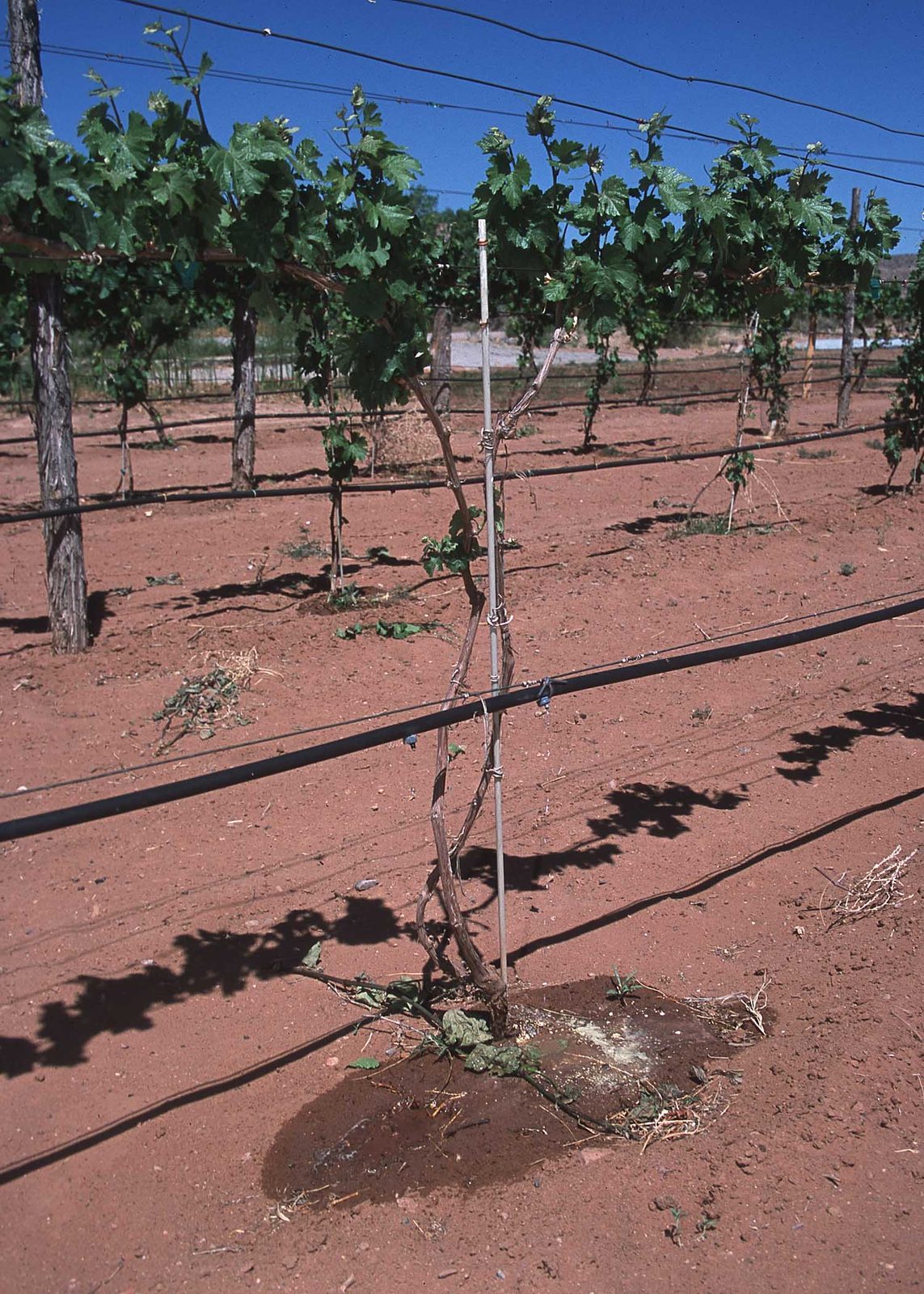
Water is the oldest decision in Napa Valley viticulture and the newest data problem. A cluster of companies, two of them based in Napa County, is building an intelligence layer for irrigation: sensors that measure what the vine actually experiences, valves that execute the decision, and models that predict what comes next.
Lumo, headquartered in Napa County, makes the execution layer. Its Lumo One valves are wireless, cloud-managed irrigation valves that give growers block-level control over water, plus pump automation. The company reports deployment across more than 150 ranches in Napa, Sonoma, the Central Coast, British Columbia's Okanagan, and Washington. In a trial documented in January 2024, Treasury Wine Estates tested 24 Lumo valves across 90 acres in Napa. Lumo raised $7 million in May 2024, co-led by Active Impact Investments and Fall Line Capital, according to citybiz.
Fruition Sciences works one level deeper, inside the vine itself. The company, which has operated from Napa as well as Montpellier, France, describes sap-flow sensors that measure vine transpiration directly, turning the plant's own water movement into irrigation guidance. Its published client references include Napa names such as Colgin Cellars and Ovid. A caution is in order: recent independent coverage of the company is thin, and its current operating status should be confirmed directly before this publication lists it as an active vendor.
Agrology provides the prediction layer. From an office in Sonoma (its headquarters is in Alexandria, Virginia), the company runs a machine-learning platform that forecasts irrigation needs alongside smoke-taint risk, extreme weather, pest and disease pressure, and soil carbon through its Arbiter system. Its customer list includes Duckhorn, Silver Oak, Joseph Phelps, and Renteria, and it is a partner in the Sonoma County Winegrowers' Farm of the Future initiative. Where Lumo executes and Fruition Sciences measures the plant, Agrology models the near future.
Taken together, the three describe an emerging architecture: measure the vine, predict the need, automate the valve. The grower moves from calendar-based irrigation sets to decisions informed by plant physiology and modeled forecasts. In a region where water scarcity has moved from periodic emergency to structural constraint, that shift has economic weight beyond the technology itself.
The honest caveats apply. Sensor networks require installation, maintenance, and connectivity in field conditions that punish electronics. Models trained on one soil type or microclimate do not transfer perfectly to another. And none of these systems removes the grower's judgment about fruit quality goals, which remain a human decision about style, not a computed optimum.
What makes this story a Napa story, rather than a generic agtech story, is density: the headquarters, the field trials, and the customers are concentrated in two adjacent counties. The water intelligence layer is being built where the water problem is most acute, by companies close enough to their customers to service what they sell.