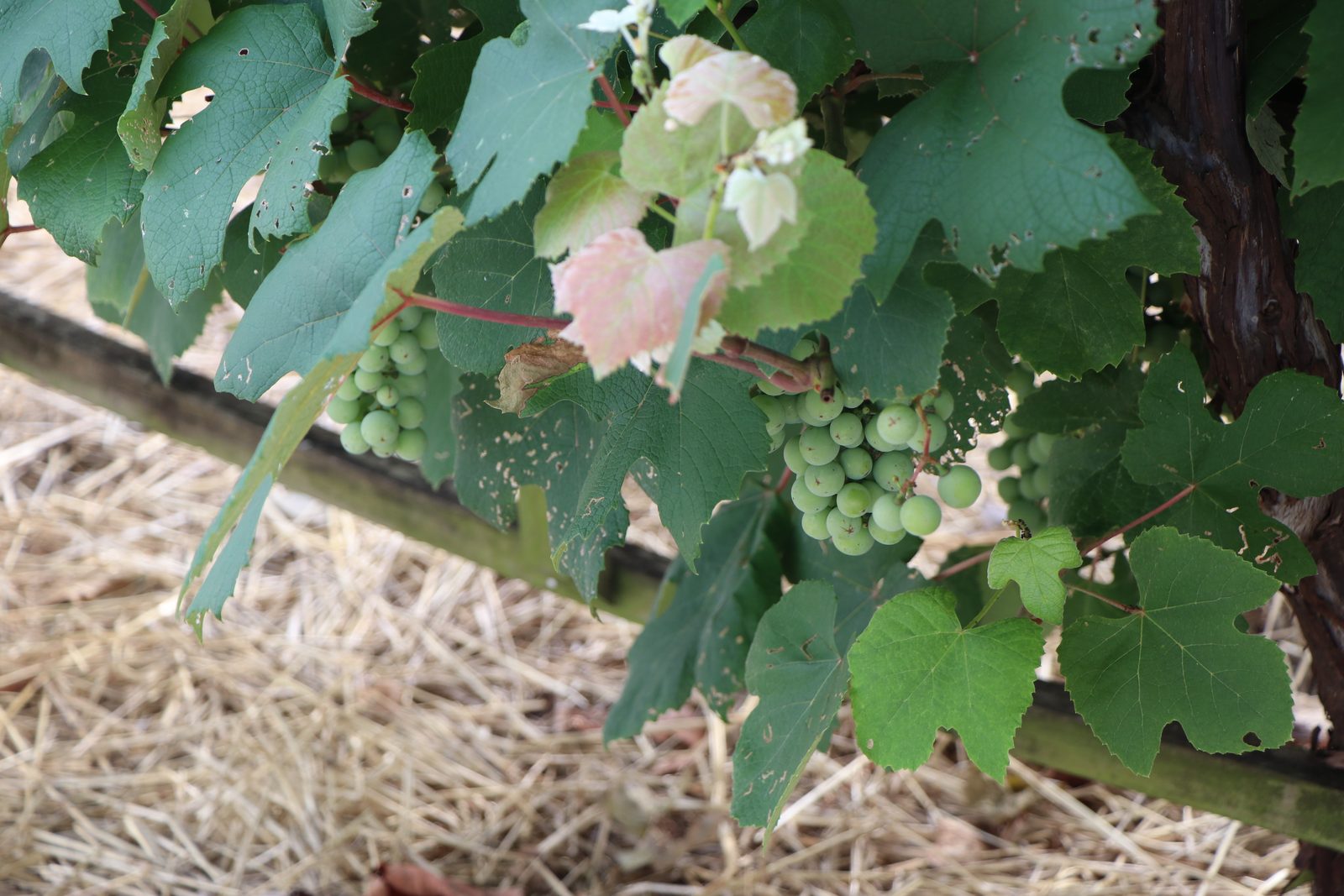
The most consequential AI in the vineyard may not look like technology at all. It looks like a camera bolted to a tractor, a phone held up to a vine, or an airplane flying a mapping grid. Computer vision has become the sensing layer for a generation of vineyard decisions, and three companies illustrate how different the approaches can be.
Scout, a Davis-area startup spun out of UC Davis, puts cameras on tractors that growers already drive through their rows. Its software maps the vineyard, counts vines, measures grape clusters from flowering onward to forecast yield, and flags virus symptoms. The company was co-founded by CEO Kia Behnia, a former Splunk executive, and CTO Mason Earles, a UC Davis professor who leads the university's Plant AI and Biophysics Lab. Earles is among the most-quoted academic voices on vineyard AI, and the lab-to-startup path is the point: research on crop-health AI becomes a product that rides on equipment already in the field.
Scout's reported traction is worth stating carefully. In a July 2025 podcast interview, the company described roughly 50 to 100 US clients, about 2 million vines analyzed, and 56 million photos processed. Those are self-reported figures, not independently audited, and they date to mid-2025. They suggest real commercial use without establishing the company's current scale.
CropMind takes the opposite hardware bet: no tractor rig required. The company's AI works from phone or GoPro imagery to produce per-plant data on bud counts, disease pressure, and yield. Its field presence in Wine Country runs through Dutton Estate in Sonoma County, where it operates a field site connected to the Reservoir Farms viticulture hub. CropMind raised $500,000 in 2025 from the NB Innovation Foundation and BKR/BKL Capital, according to Entrevestor, and was selected in March 2026 for the Google for Startups Accelerator in Canada, a signal of technical credibility even though the program is not a funding event. Claims about live commercial use in Sonoma should be read with the usual caution: the company's own site is the primary source, with the Reservoir Farms announcement corroborating the field-site relationship.
VineView represents the established end of the spectrum. Operating from Angwin in Napa County, with headquarters in Halifax, Nova Scotia, the company has spent more than two decades producing calibrated aerial imagery, from drones and airplanes, that maps vine vigor, water content, and disease signatures including leafroll and flavescence doree. Where the startups sell AI models, VineView sells measurement: calibrated imagery that turns canopy reflectance into management zones. Its longevity in California wine regions makes it the baseline against which newer AI vision products are judged.
What unites the three is a shared bet that the vineyard's scarcest resource is attention. A viticulturist cannot walk every row every week; cameras can. The models promise to replicate what an experienced eye does at flowering, at veraison, at harvest, and to do it uniformly across thousands of acres.
The honest limitations deserve equal space. Vision models are trained on specific varieties, trellis systems, and lighting conditions, and performance degrades outside their training distribution. A yield forecast from cluster counts at flowering is a statistical estimate, not a measurement, and virus identification from imagery is a screening tool, not a diagnosis. The AP's March 2025 reporting on vineyard AI also surfaced scalability questions around drone-based approaches, a reminder that the sensing method constrains the business model as much as the algorithm does.
For growers evaluating these tools, the useful question is not whether the AI works in a demo but whether its error rate beats the sampling methods it replaces, and whether the data integrates with decisions about labor, harvest timing, and crop sales. The companies that survive will be the ones whose measurements change what happens in the field.
Related hardware coverage, including autonomous in-row scouting robots such as Budbreak's "Emma," belongs to our sibling publication NAPA ROBOTICS. This publication covers the perception and decision layer: what the cameras see, and what the models conclude.