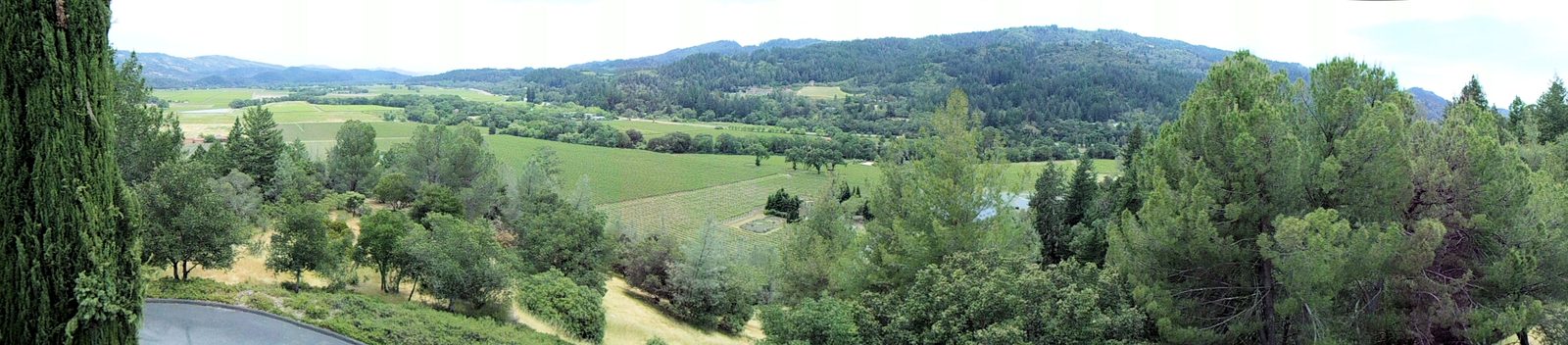
Napa Valley has always attracted outside capital, but the current wave has a distinct professional signature: technology. A series of documented acquisitions shows founders and executives from the tech industry buying wineries and vineyard estates across the valley. The pattern is worth examining with the same discipline this publication applies to startups: documented facts only, no speculation about private individuals, and no private addresses.
The clearest recent case is Pritchard Hill. In 2019, former Apple executives Jim Bean and Christine O'Sullivan acquired the Brand winery property, with 15 acres of vines producing roughly 1,000 cases a year, according to The Drinks Business. The buyers' professional history is public; the property's scale is documented. It is a modest, quality-focused holding, not a trophy acquisition, which makes it more representative than the headline estates.
A year earlier, in 2018, Juan Pablo Torres-Padilla, described as the former CEO of a Paris-based artificial intelligence company, acquired the historic Sullivan Vineyards in Rutherford through his company VITE. The estate covered 26 acres at acquisition; by 2021 he had added a Soda Canyon property and the Criscione Vineyard, bringing the Sullivan Rutherford Estate to roughly 40 acres and 3,000 to 5,000 cases a year. Two caveats attach to this case: the name of Torres-Padilla's AI company is not documented in the sources reviewed, and one retail source dates the acquisition to 2020 rather than 2018. Both need verification before this case is cited at feature length.
The longest-standing example is Kenzo Estate. Kenzo Tsujimoto, the founder, chairman, and CEO of video-game company Capcom, purchased 3,800 acres on Mt. George above Napa in 1990 and built the Kenzo winery there. The documentation is a 2015 profile, dated but describing longstanding public ownership. It demonstrates that the tech-to-Napa pipeline predates the current AI cycle by decades.
The corporate version of the same pattern is LVMH. The luxury group acquired Joseph Phelps Vineyards in Napa Valley in 2022, and its Moet Hennessy division is now co-leading an AI sensing collaboration with Analog Devices and UC Davis, announced in October 2026. Technology capital is not only buying vineyards; it is funding the research agenda.
Two related figures complete the picture. Hayes Drumwright, the Trace3 founder turned three-winery owner, is profiled separately. Carlo Mondavi, a member of Napa's Mondavi wine family, moved in the opposite direction, co-founding Monarch Tractor in 2018 and carrying wine-country credibility into a robotics startup that ultimately collapsed.
What does the pattern mean? At minimum, it means the region's ownership class increasingly includes people whose fortunes were made in software, semiconductors, and platforms, and whose instincts about data, automation, and scale travel with them. That has consequences for how vineyards get managed, how wineries get marketed, and where the region's technology investments originate. It does not mean every wealthy property owner works in AI, and this publication will not make that assumption. Each case stands on its own documentation.
The honest limit of this analysis is access. Property transactions are public; motivations are not. The interesting reporting ahead is not who bought what, but what the buyers do next: whether technology operators run wineries differently, and whether that difference shows up in the glass, the payroll, or the land.